
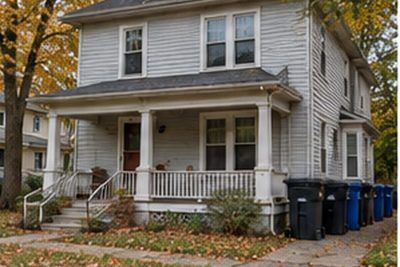
Newark has one of the largest student rental sectors in Delaware, and the plumbing in that housing behaves differently from the same houses in owner-occupied use. Higher occupancy, long vacancies, and nobody on site who knows where the shutoff is.
The permit side of that is straightforward once you know the rule. The plumbing side is where the money goes.
What triggers a rental permit in Newark
The City requires an annual rental permit in two situations, and the second one catches people out:
- The property is not owner-occupied and is leased to a tenant. The obvious case.
- The property is owner-occupied, but rooms are let to more than two people unrelated to the owner. Less obvious, and it reaches arrangements the owner may not think of as a rental business at all — living in the house while letting three rooms to students, for instance.
Permits are renewed yearly, not issued once. And if you stop renting, or the property changes hands, you have to update the rental licence application or request a discontinuation form through Code Enforcement rather than letting it lapse.
Verify your own situation. Requirements change, and this article is a starting point rather than an authority. Newark Code Enforcement: (302) 366-7000,
[email protected], Newark Municipal Building, 220 S Main Street.
What inspection covers — and the gap it leaves
Newark's rental permit process is oriented around visible life safety issues. It includes:
- Mandatory exterior inspection
- Mandatory common area inspection
- Voluntary interior inspection
That last line is the one to pay attention to. Most of what actually fails in a rental is interior plumbing, and the mandatory portion of the inspection does not reach it.
Passing a rental permit inspection is not a plumbing survey and should not be mistaken for one. A property can hold a current permit and still have a seized main shutoff, a supply line about to let go behind a wall, and a water heater eight years past its service life.
The plumbing that actually causes landlords trouble here
Four patterns, and they are specific to how this housing gets used.
1. Nobody knows where the shutoff is
This is the expensive one, and it is free to fix.
In an owner-occupied house, somebody usually knows. In a rental, often nobody does — so when a supply line fails at 2am, the water runs until a landlord can be reached and someone with knowledge arrives. The difference between a wet floor and a replaced ceiling is almost entirely how many minutes that takes.
Before every tenancy:
- Locate the main shutoff. In most Newark houses with a basement it is on the wall facing the street, near where the service line enters, close to the meter. In slab-built and newer townhomes it is more often a utility closet, the garage, or by the water heater.
- Turn it. A valve that has not moved in twenty years can seize, and finding that out during an emergency is its own disaster.
- Tag it so it is unmistakable.
- Put its location in the tenant handover, in writing, and point at it during the walkthrough.
Do the same for the stop valves under each toilet and sink. In older houses these are frequently seized, which means a tenant with a running toilet cannot isolate it and you get the call instead.
2. Occupancy load on builder-grade fixtures
A three-bedroom house with five occupants uses fixtures several times harder than the family home it was built for. Flush valves, fill valves, tap cartridges and shower valves all fail on a compressed timescale, and the cheapest components fail fastest.
A running toilet is the classic. It is silent, it can pass a genuinely surprising volume of water continuously, and in a shared house nobody reports it because nobody is paying the water bill. It shows up on yours.
The food colouring test takes thirty seconds per toilet at inspection: a few drops in the tank, wait, look for colour in the bowl. A flapper costs a few dollars.
3. The summer vacancy problem
Student properties stand empty for months. Water sits in the pipes.
In a pre-1960s Newark house still running original galvanized steel, that produces genuinely rusty first-draw water when the taps are used again — which is why there is a reliable cluster of "the water is brown" calls every September from the same streets.
It is not usually a fault. It is sediment that settled while the house was empty, disturbed when flow resumes. But it generates complaints, occasional maintenance requests, and the odd dispute about habitability.
Flush the system before the tenancy starts. Run every tap, hot and cold, for several minutes. It takes twenty minutes across a house and removes a predictable September problem. If the water does not clear, that is a real signal — see galvanized pipe in older Newark homes.
Vacancy is also when you should consider whether to shut off and drain over winter, and what to set the water heater to. An empty house with heat off and water on is how burst pipes happen.
4. Drains, and who caused it
Blockages in shared housing are frequent and they are the most common source of landlord-tenant argument, because responsibility genuinely depends on cause.
A kitchen line that blocks because of grease and food is arguably conduct. A line that blocks repeatedly in the same place is the pipe — and in pre-1970s Newark housing that usually means scaled cast iron, which is condition, and yours.
The distinguishing question is simple: has this line blocked before? One clog is an event. The third clog in the same line is a diagnosis nobody has done. Drain cleaning covers what separates the two.
Where the line actually falls under Delaware law — condition versus conduct, the notice periods, and the repair-and-deduct cap — is set out in who pays for plumbing repairs in a Delaware rental.
And a house that smells of sewer on move-in day is almost never a drainage fault. Every trap in an empty property evaporates over a summer; why your drains smell has the twenty-minute fix.
The pre-tenancy record
If you take one thing from this article, take this. Photograph and date the plumbing before each tenancy:
- Under every sink
- Behind and around each toilet, including the floor
- The water heater, including its data plate
- The main shutoff, tagged
- Any existing staining, corrosion or damage
Ten minutes with a phone. It settles almost every later dispute about whether something was pre-existing, it supports an insurance claim, and it gives you a dated baseline for condition — which is exactly the distinction Delaware's Landlord-Tenant Code turns on when responsibility is in question.
What to check between tenancies
A short list, worth doing every turnover rather than only when something fails:
| Check | Why |
|---|---|
| Main shutoff turns | The single highest-value item on this list |
| Every fixture stop valve turns | So a tenant can isolate without calling you |
| Food colouring test on each toilet | Silent running costs money quietly |
| Water heater age and anode | Past ten years, plan replacement rather than wait |
| Supply connectors at toilets and washing machine | Braided stainless, not plastic. A failed connector floods a house |
| Flush all lines after vacancy | Prevents the September brown-water call |
| Visible corrosion on exposed pipe | Especially at threaded joints in older houses |
| Water pressure | Above 80 psi shortens the life of everything |
In short
Newark requires a rental permit annually, including for owner-occupied properties letting rooms to more than two unrelated people, and it is renewed each year rather than issued once. The mandatory part of inspection covers exterior and common areas — interior is voluntary, so passing does not mean the plumbing is sound.
The four things that actually cost landlords money here are a shutoff nobody can find, builder-grade fixtures under high occupancy, stagnant water over the summer vacancy, and arguments about who caused a blockage. A dated pre-tenancy photo record resolves most of the last one.
Confirm your own permit position with Newark Code Enforcement on (302) 366-7000 — this article is a starting point, not an authority.
Related questions
Possibly yes. Newark requires a rental permit for properties that are not owner-occupied and are leased to a tenant — and also for owner-occupied properties that let rooms to more than two people unrelated to the owner.
That second clause catches arrangements people do not think of as a rental business: an owner living in the house with three student lodgers, for example. If you are letting rooms at all, confirm your situation with Newark Code Enforcement rather than assuming owner-occupancy exempts you.
Newark's rental permit process is built around identifying visible life safety issues. It includes mandatory exterior and common area inspections, with interior inspection available on a voluntary basis.
That mandatory/voluntary split is worth understanding: much of what actually goes wrong in a rental is interior plumbing, which the mandatory portion does not reach. Passing your permit inspection is not the same as the property being in good order, and it should not be treated as a plumbing survey.
Annually. Newark rental permits are renewed each year rather than issued once.
If you stop renting the property, or ownership changes, you need to update the rental licence application or request a discontinuation form through the Code Enforcement Division — it does not simply lapse quietly. Newark Code Enforcement can be reached on (302) 366-7000 or at [email protected].
Under Delaware's Landlord-Tenant Code, landlords must keep plumbing and other supplied facilities in good working order, and generally have a limited window from written notice to act. Tenants must keep the fixtures they use clean and safe, and use them reasonably.
The practical dividing line is usually condition versus conduct: a failing shutoff valve or a corroded supply line is yours; a blockage caused by what went down the drain is arguably theirs. That distinction is easier to defend when you have a dated pre-tenancy record of the plumbing, which is the single most useful thing in this article.