
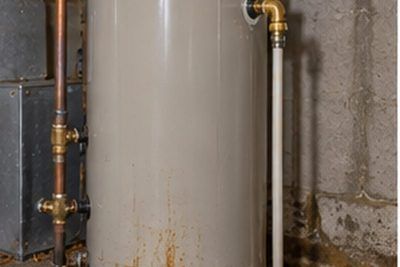
Water heaters make noise. Expansion, flow and combustion all produce sound, and a completely silent unit is not the standard to judge yours against.
But each distinct noise has a specific mechanical cause, and knowing which one you are hearing tells you whether to act today, schedule something, or ignore it.
Quick reference
| Sound | Usual cause | Urgency |
|---|---|---|
| Popping, rumbling, kettling | Sediment on the tank floor | Schedule a flush |
| Screeching, whistling | Restricted flow, often the T&P valve | Check this week |
| Ticking, tapping | Pipe expansion, or heat traps | Usually harmless |
| Banging, hammering | Water hammer in the pipes | Fixable, worth doing |
| Loud bang at ignition | Delayed ignition on a gas unit | Have it looked at |
| Humming | Loose element on an electric unit | Minor |
| Sizzling or crackling | Condensation, or a leak onto the burner | Check for a leak |
Popping and rumbling — sediment
The most common complaint by far, and the one that tells you most about the unit's remaining life.
Minerals settle out of the water and accumulate on the tank floor. On a gas heater the burner sits underneath, so water trapped beneath that layer superheats, flashes to steam, and forces its way up through the sediment. That percussive pop is steam escaping.
Why it matters beyond the noise: sediment insulates the water from the burner. The unit fires longer to reach the same temperature, uses more fuel, and the tank floor sits at higher stress than the design assumed. It shortens the life of the heater rather than merely annoying you.
What to do: flush the tank. On a unit flushed regularly that is routine maintenance. On a ten-year-old tank that has never been flushed, heavy deposits may not shift — and there is a specific risk worth knowing about, below.
The local angle: City of Newark supply comes from the Newark Reservoir at moderate hardness, which is genuinely kinder to tanks than hard-water regions. If you are hearing heavy sediment noise on city water, the unit is probably simply old.
On a private well around Hockessin or Pike Creek, untreated water can carry considerably more mineral content, and annual flushing stops being optional.
One caution about flushing an old tank
On a heater that has never been flushed, sediment can hold the drain valve part-open so it will not reseat — and you cannot stop the flow. A maintenance job becomes an emergency in the space of a minute. If the unit is old and has never been drained, it is worth having someone there who can handle that if it happens.
Screeching and whistling — restriction
A high-pitched sound is water forced through a gap smaller than it wants. Three usual sources:
The temperature and pressure relief valve. Check this first. The T&P valve is a safety device that opens if temperature or pressure exceeds safe limits. A whistle or weep means it is either doing its job — in which case something upstream is wrong — or it is failing.
Never cap, plug, or tighten a T&P valve to silence it. It exists to prevent a tank rupturing. Blocking it converts a visible warning into an invisible hazard, and it is one of the specific things a State of Delaware Plumbing Inspector checks on an installation.
A partly closed valve, usually the cold inlet after someone worked on something nearby.
A sediment-restricted drain valve.
Ticking and tapping — usually nothing
Metal pipes expand as hot water passes through them and contract as they cool, and where a pipe passes through a joist or a bracket that movement ticks.
Heat trap nipples — fitted at the inlet and outlet of most modern heaters to stop convection losses — also tick as they seat.
Both are normal. If it bothers you it can sometimes be quieted by padding where a pipe passes through framing, but it is a comfort issue rather than a fault.
Banging and hammering — water hammer
A heavy bang when a tap or appliance shuts off is water hammer: moving water stopped abruptly, with the momentum nowhere to go.
It is most noticeable near the heater because there is a lot of pipe there, but the cause is system-wide. Worth addressing rather than tolerating — repeated shock loosens joints and stresses connections over time.
Fixes are straightforward: arrestors at the offending fixtures, securing loose pipe runs, and checking your pressure. Anything above about 80 psi makes hammer worse and shortens the life of everything in the house, which usually points at a pressure-reducing valve.
That connects to the broader picture in why is my water pressure low, which covers both ends of the range.
A loud bang when the burner lights — take this one seriously
Distinct from water hammer, and worth separating clearly.
If a gas unit produces a single loud bang or whump at the moment it fires, that can indicate delayed ignition: gas accumulating in the combustion chamber before igniting all at once.
Causes include a dirty or misaligned burner, a partly blocked pilot orifice, or poor venting. It is not something to live with, and it is not a DIY job — gas work is licensed in Delaware and the combustion side is exactly where that matters.
Humming — electric units
A steady hum on an electric heater is usually an element vibrating slightly in the flowing water. Tightening it resolves it, and it is minor.
Sizzling or crackling
On a gas unit, condensation dripping onto the burner sizzles, and that is normal on a cold start or when a large volume of cold water enters.
Persistent sizzling is different: it can mean a leak from the tank or a fitting dripping onto the burner assembly. Look underneath. Water pooling at the base means the tank has perforated, and that is terminal — a leak from the tank body cannot be repaired at any price, as covered on the water heater page.
When noise plus something else means stop
Any of the sounds above, combined with any of these, means stop and call:
- Water pooling at the base of the tank — the tank has failed
- Rust-coloured hot water, meaning the anode is spent and the lining is corroding
- A smell of gas — leave the building and call the gas utility from outside, before you call a plumber
- Scalding or wildly fluctuating temperature, suggesting a thermostat or mixing fault
In short
Popping and rumbling is sediment: schedule a flush, and treat it as a signal about the unit's age. Screeching is restriction, and the T&P valve is the first thing to check — never block one to quiet it. Ticking is expansion and is harmless. Banging when a tap shuts is water hammer, which is fixable and worth fixing.
The one that deserves real attention is a loud bang at the moment a gas burner ignites, which can mean delayed ignition.
And any noise at all alongside water at the base of the tank means the tank has gone. No repair fixes that one.
Related questions
Not immediately, in most cases. Popping and rumbling are caused by sediment on the tank floor — water trapped underneath superheats and forces its way out as steam bubbles, which is the noise you hear.
It is not a safety emergency, but it is not harmless either. Sediment insulates the burner from the water, so the unit works harder, runs less efficiently, and the tank floor sits under higher stress than it was designed for. It shortens the life of the heater. Flushing helps early on; on an older unit with heavy buildup it may not.
A high-pitched screech or whistle is water being forced through a restriction — usually a partly closed valve, a failing temperature and pressure relief valve, or a sediment-blocked drain valve.
The T&P valve is the one to check first. It is a safety device, and if it is whistling or weeping it is either relieving genuine excess pressure or failing. Never cap, plug or tighten a T&P valve to stop the noise. That converts a warning into a hazard.
On a unit that has been flushed regularly, yes, and it is reasonable maintenance. Turn off the power or gas, close the cold inlet, attach a hose to the drain valve, and run it to a drain until it clears.
The caution is for units that have never been flushed and are ten years old. Heavy sediment can hold the drain valve part-open so it will not reseat, leaving you unable to stop the flow — a maintenance job becomes an emergency. On an old, never-flushed tank it is worth having someone there who can deal with that if it happens.
None of the noises alone, but two combinations warrant stopping. A loud bang or knock at the moment the burner fires on a gas unit can indicate delayed ignition — gas accumulating before it lights — and that needs looking at rather than living with.
And any noise accompanied by water pooling at the base of the tank, rust-coloured water, or a smell of gas means stop and call. A leak from the tank body cannot be repaired at any price, and a gas smell means leaving the building and calling the utility from outside before you call a plumber.